How does it work?
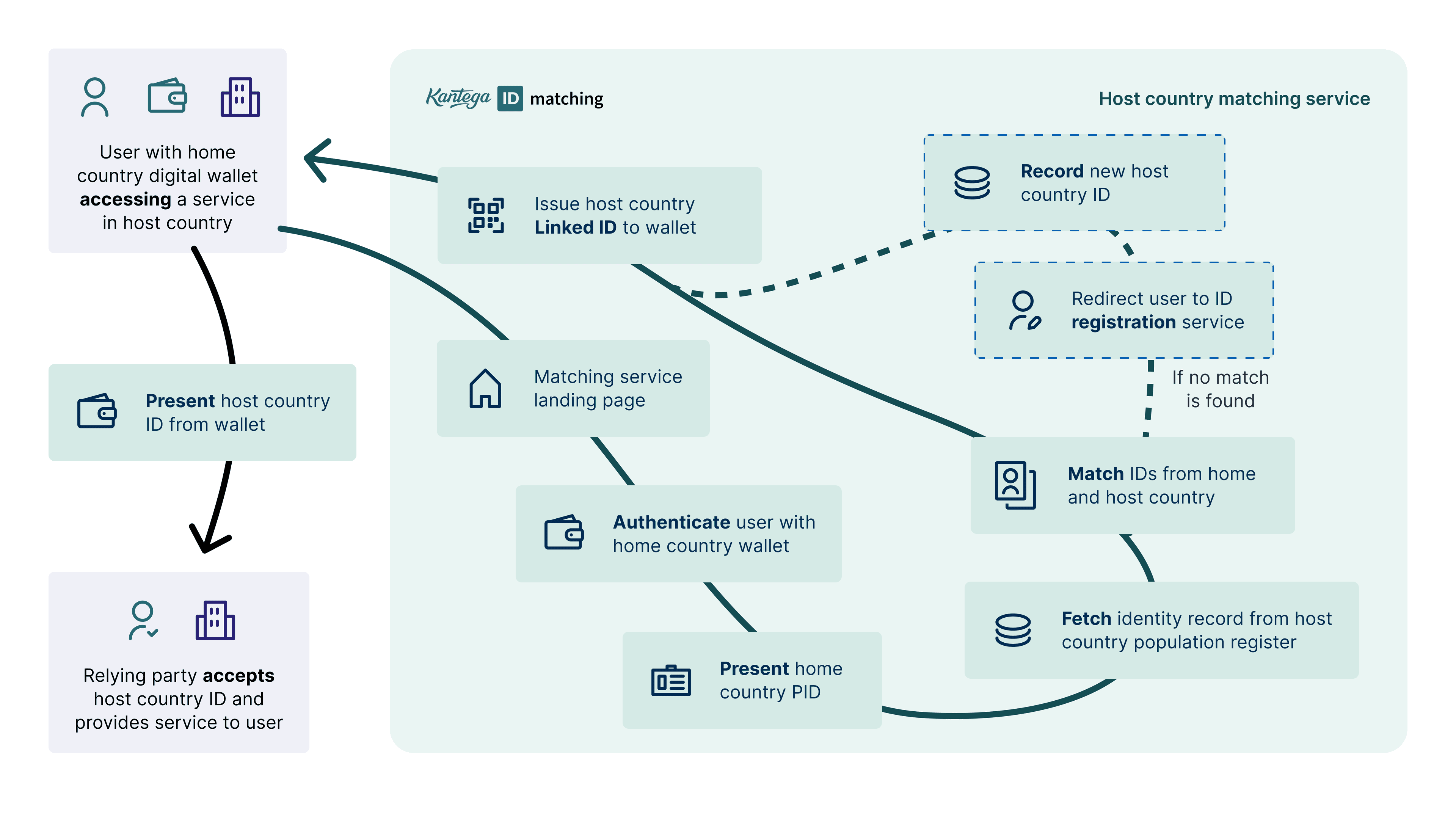
An example: You are Swedish, but you have lived and worked in Norway. So you have both a Swedish and a Norwegian identity. Now you want to log in to a Norwegian service with your Swedish eID. The service only knows you as the person in the National Population Register, and does not know that the Swedish ID is also you. Here we describe how this can work with the digital identity wallet that will be available in Norway in 2027.
1
Log in to the service with a wallet
You choose to log in with a digital wallet and your personal ID, .
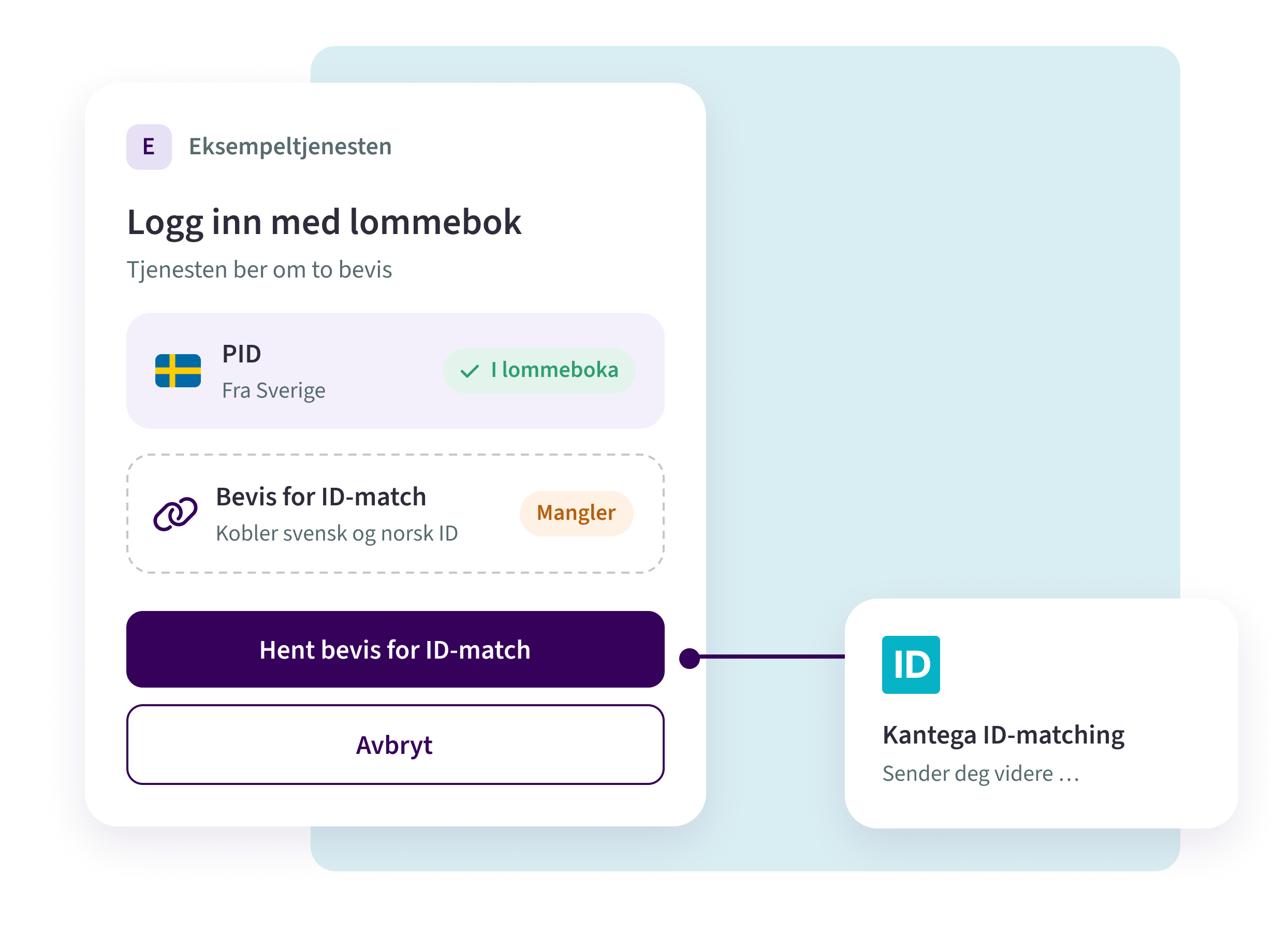
The service asks for two credentials: the Swedish PID and proof of a valid ID match. The proof shows that the Swedish ID and your Norwegian identity belong together. If you already have proof of a valid ID match, you share both and you are logged in.
If you do not have this proof, you can get it. The service then sends you to a matching service, such as Kantega ID matching.
2
Present your foreign PID to the matching service
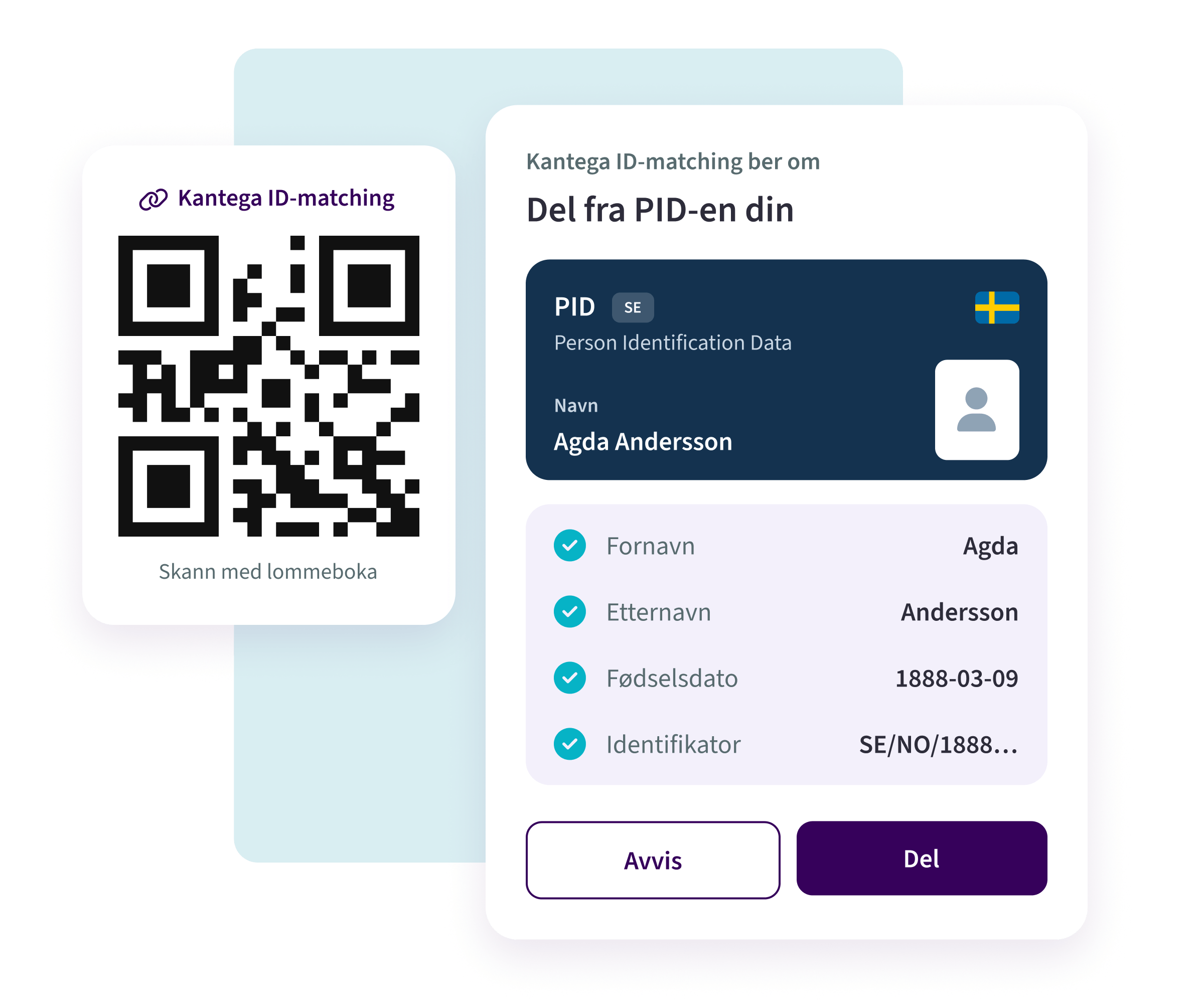
The matching service asks you to log in with the Swedish PID. You scan a QR code with your phone and share the PID from your .
The service only asks for the details it needs to find you in the National Population Register. You see what it asks for, and you choose whether to share.
The service only asks for the details it needs to find you in the National Population Register. You see what it asks for, and you choose whether to share.
3
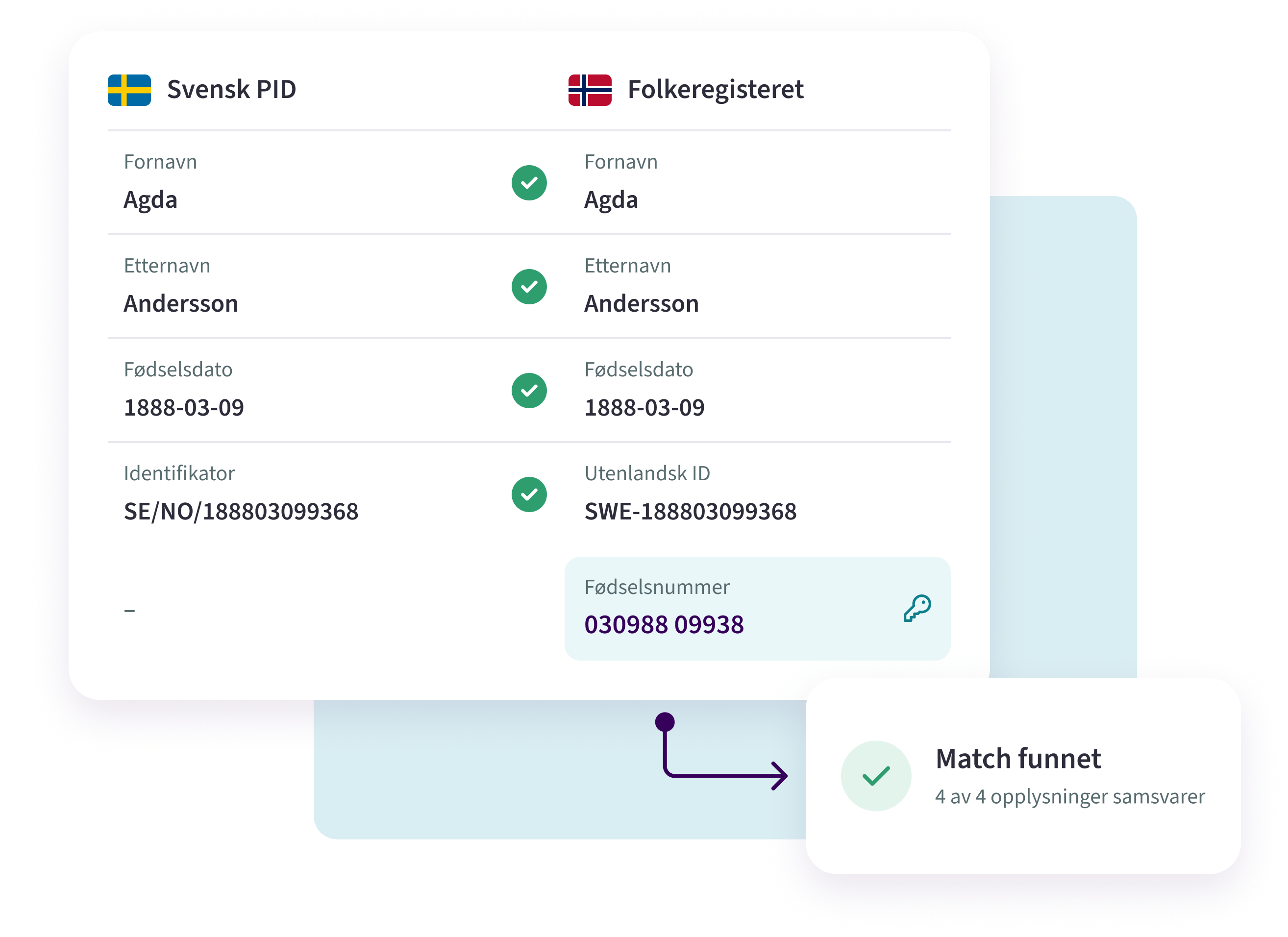
Search the National Population Register
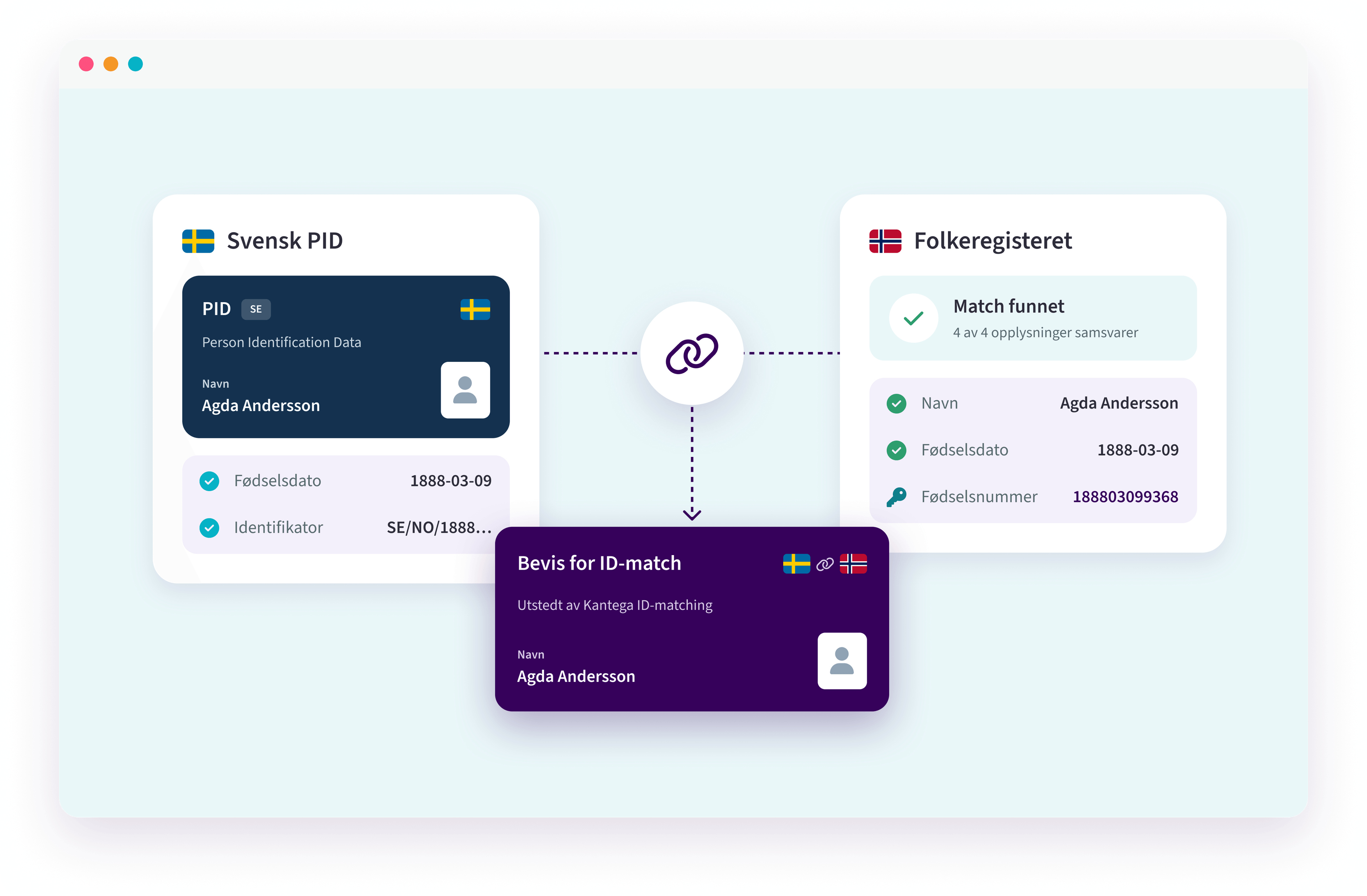
The ID matching service searches the Norwegian National Population Register for identities with matching attributes. If an approved match is found, your Norwegian identity, together with the Swedish ID number, is passed on to the service.
4
Issuing proof of a valid ID match
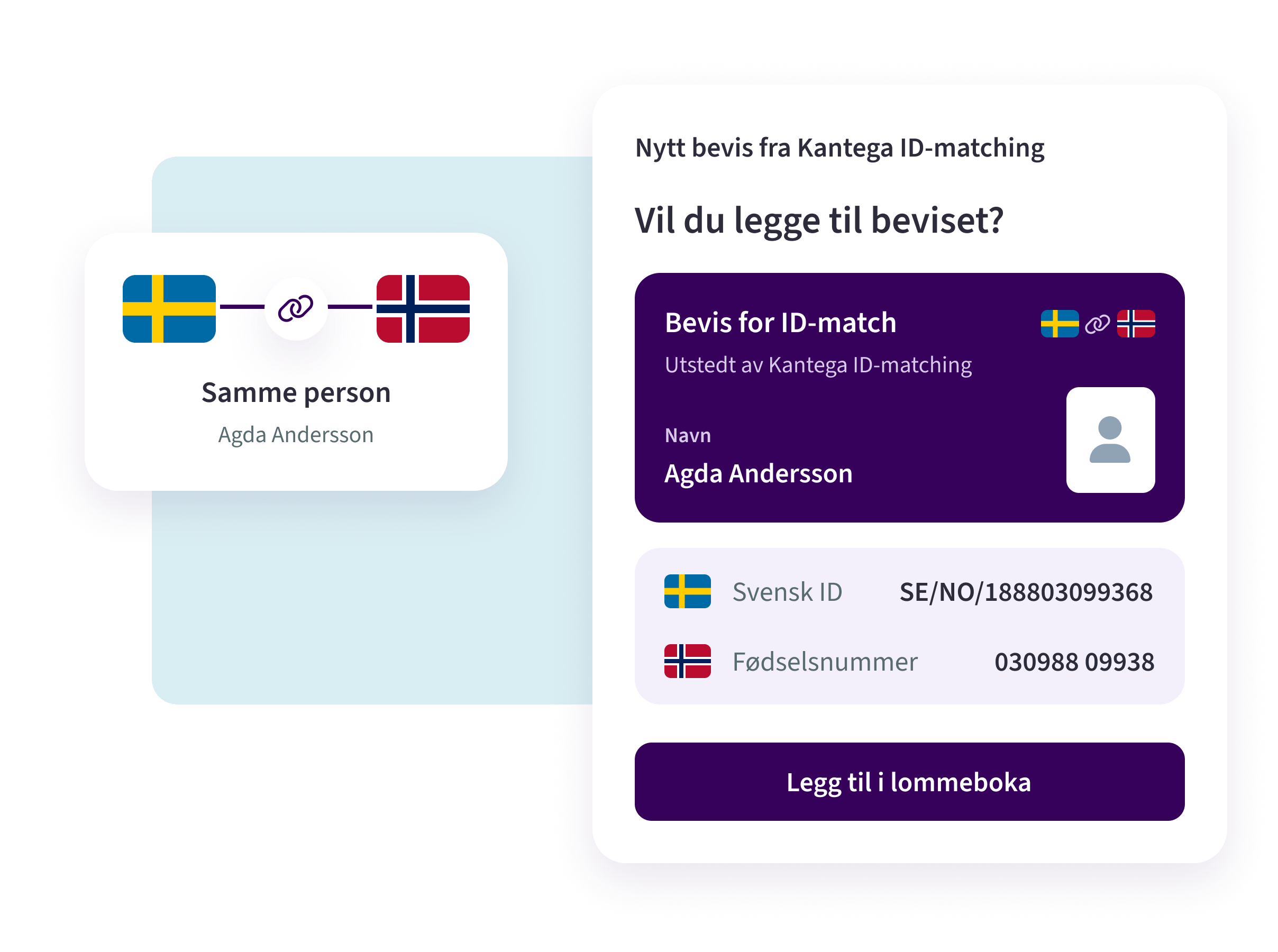
After an approved identity match, proof of a valid ID match between the Swedish PID and your Norwegian identity is issued.
This proof can then be used together with the Swedish ID to log in to Norwegian services.
Once the proof has been issued, you are sent back to the service where you started.
This proof can then be used together with the Swedish ID to log in to Norwegian services.
Once the proof has been issued, you are sent back to the service where you started.
5
Log in with PID and proof of a valid ID match
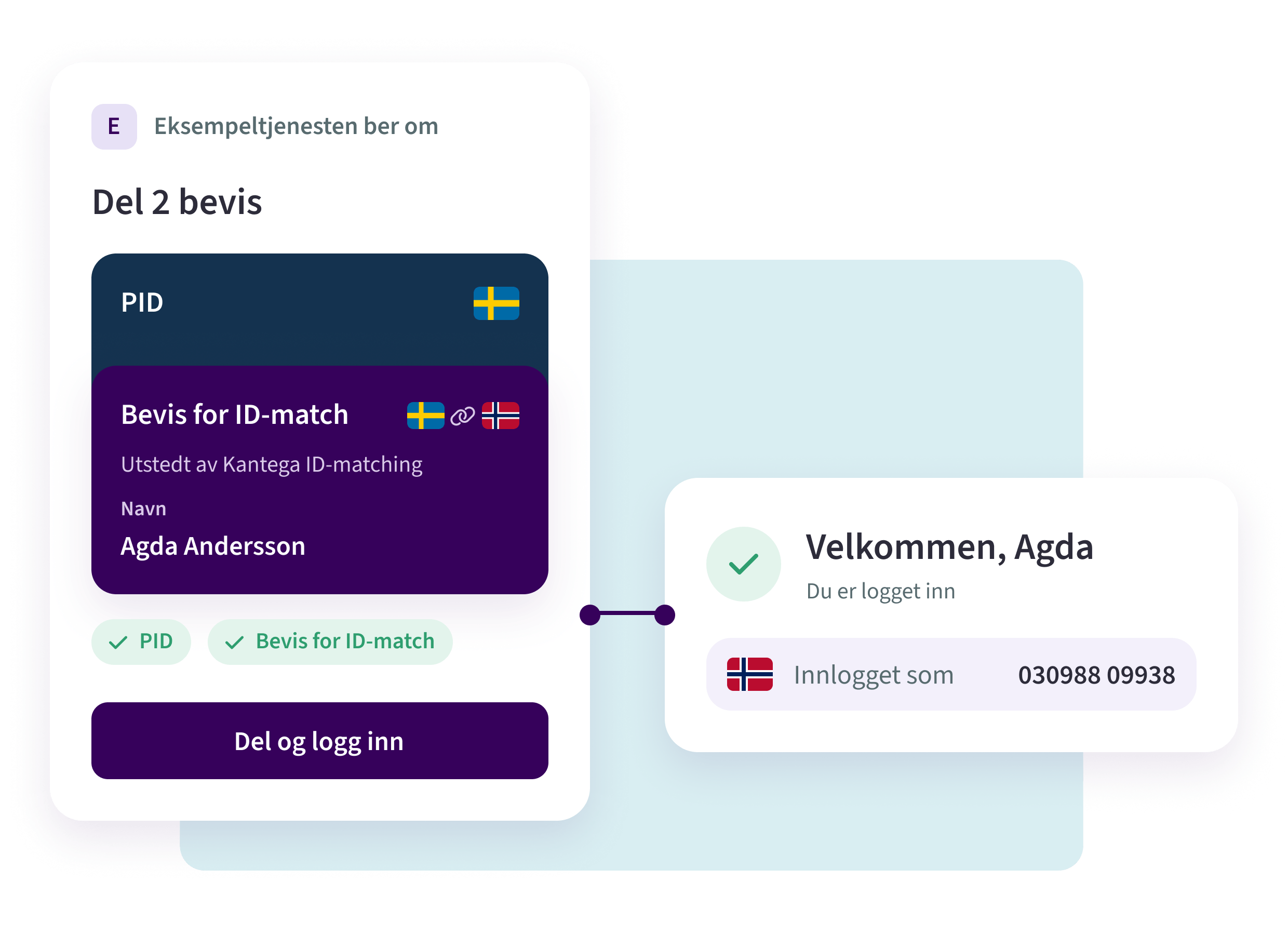
Now that you have received proof of a valid ID match in your wallet, this proof can be used together with the Swedish PID to log in to the service.
The next time you log in to the service, you share the same credentials again and do not need to go through the matching process again.
The next time you log in to the service, you share the same credentials again and do not need to go through the matching process again.